Friday, November 15, 2013

Hold on to the Tingles

I just posted this to one of the Indie Dev Facebook Groups that I frequent, as I see more and more indies getting down on themselves as their games continue to not sell very well:

Hey everyone! I just wanted to say that despite the current indie climate, and even if it changes for the better or for the worst, you should always remember why you are making games in the first place. 
You are doing something that is so very, very hard and frustrating and at times, I know, you must ask yourself why when you could put your talents into another industry, another trade and make much more money to get all the things you want for yourself or for your family versus this struggle.
I bring this up because I see so many worrying about "being able to support themselves" by doing this; its mentioned daily. I do too, but we can't all make games that sell hundreds of thousands of units, even if they all deserve to do so! There just aren't enough consumers for that. If you hold on to why you got into game dev, that tingly magical feeling of it, then your work will improve; your game will be so much better if its made out of passion and not to support yourself. 
Games made to make money are inspired by sales data, by current trends, by past successes. Games should be inspired by things like history, struggle, love, loss, victory, family, etc; real themes that we all, as humans, encounter at some points in our lives. Good games are no different from good books, as we all know. 
I'll leave you with a quote from the game I'm making right now:
"Fulfillment is a risky balancing act where one must risk breaking the cup they try so desperately to fill."

I think ALL devs should try to support themselves with their work, but that shouldn't be the reason to gamedev in the first place.

Wednesday, June 12, 2013

The Bootstrappers: Out with the 80s Guy, In with Indie

It's been awhile since my last post, but I have a slew of good excuses: prototyped my first game, put together a little team to build a Kickstarter campaign for it, and have been getting everything ready to (finally) make the big move out west to California or Seattle. While I also have 3 new blog drafts that will collect e-dust for eternity, I've noticed a paradigm shift in the industry that I had to write about.

See, the biggest problems I have with the games industry stem from the culture set in place by this guy:
The 80s Guy (Futurama)

That's not the cartooned version of an actual person, rather he's the archetypal representation of an obsession with the bottom line. 80s Guys do whatever it takes to score the most profit. They do not shy away from drowning others in legal shenanigans to get what they want. They play hardball 24/7.

The ironic part is that these guys made the video game industry as big as it is today. The problem is that they did so on the backs of underpaid developers. This industry is best characterized by the endless struggle between these two factions: those who are here to make their dream game, and those who want to buy yachts.

Now, that is an extremely polarized view. The majority of people in the industry fall into the gray middle area. And most of those grays do so out of necessity: games cost money. Having seen the industry from both sides, I am able to relate. Games need to make money since the people who make them need to feed and house their families. Yes, there are lots of fees from first parties, retailers put on a shitload of pressure (and fees), and then there's all the licensing, marketing, trade shows, and legal dues. Those other things can add up, but there are ways to avoid 95% of them.

The big question is: if 80s Guys are so bad, why do we need them?

In short, they built what we have today. They turned a curiosity into an empire. They were the first ones to make licensed games, to cross-promote, on-disc DLC, DRM, pre-order exclusives, Mountain Dew & Doritos, etc. All of those things are tools to squeeze more money out of consumers. The industry was started by the bright-eyed hopeful (or a few scientists and fantasy nerds), but it was made into the billion dollar force by the 80s Guy.

But the sun is setting on the 80s Guy. Games no longer require gagillion dollar budgets, lawyers, publishers, or retailers to sell. Making games (and still being able to sell them) now just requires a programmer and an artist. People are making games about being an immigration inspector, MUDs are making a comeback (!), and Steam Greenlight is just a spawning pool of all kinds of cool, thought-provoking stuff. But who is making these games for next-to-nothing?


The Bootstrapper - The 80s Guy Antithesis


He waits tables on the weekends to supplement his weekday pizza-delivery income, and spends every night plugging away on his game. He's self-taught through videos, psuedo-mentorships, books, modding. He doesn't care about profits; he cares about his family, his team, and his game. He's always looking forward to the "one day" when its released and its perfect. He is as indie and indie gets.

It's funny how the industry is circling back and relying on the same type of person who started it all in the first place. Without these super-indies the 80s Guy has nothing to push, no new ideas to steal. More and more bootstrappers are appearing as game development becomes cheaper. And the 80s Guys are retiring or moving to other, more profitable ventures. 

Their greatest accomplishment, the gaming console, is in its last generation. Will the Xbox Two even play games? Will consumers need it to? Who knows. All I can say is that I am happy that in the struggle between creativity and profits, creativity is prevailing. There is a merger between the two factions, a new breed of developer. See, bootstrappers also know how to market their games, how to land funding they might require; how to sell. They are not the bright-eyed curious hobbyists of the past. They are here to make games and sell them to make just enough money to fund the next one. Can their games do well? Of course! But money doesn't matter to them; money is an issue of filling a small tank that fuels their passion, not creating a stockpile of excess. 

Profit is the by-product to the bootstrapper, not the goal.

Friday, November 23, 2012

RPG Systems: A Balance of Freedom

Do you get tingles at the end of your spine when thinking/working/playing with game mechanics? When a new MMO or RPG comes out do you pour hours (or days) into creating character builds, even though you do not have any plans to actually play it? I sure as hell do; my current fascination is the Smite "closed" beta since Hi-Rez did a lot of work adding options for players. If you haven't played in awhile (last I played was when Cupid came out), fire it up and look around.

Besides Smite, the past few weeks have been spent absorbed in pre-production system design for my first title. It has been wonderful. I could (and do) work on systems all damn day. There's just something magical about weaving math and narrative together. Working systems reminds me of why I got into this business; for the tingles.


In an earlier post I talked about the 3 ways RPGs balance their games: Homogenization, Anomalization, and Self-Limitization. These are used to make sure that each choice a player can make is as good as the next in the context of completing a game's victory conditions. That's the "golden rule": all decisions, while different, must be equal; especially in games with PvP. Off the top of my head, only a handful of games have achieved this: Final Fantasy X's wonderful spheregrid comes to mind, Guild Wars 2 has a great omnipotent approach to it, and the new World of Warcraft talent system is a wonderful example of Self-Limitization.

But how do all of these systems work? Why do we think they are fun?

Limited Freedom

Most game designers set out to create a "playstyle" that revolves around doing the "same thing but different", or the choices revolve around a pre-defined meta. WoW's new talent system, for example, lets the player make choices within the very strict tank/dps/heal mechanic. The fact that the game's "meta" is pre-set and hammered in place by the developer allows them to cage-in the player's choices. The player cannot make bad choices because the game's systems do not allow it; I cannot make a Mage to tank heroic raids because it's simply impossible due to a lack of gear, talents, etc., although I do remember blink-kiting (with ice block) the last boss of UBRS back in the day.

RPG systems are simply limits on the player's freedom. "Skills" are the actions a character can take that differentiates them from other characters. Here they are in order from most freedom to least:
  • Blank Slate (Skyrim)
    • Populate character with any selection of Skills
    • Customize those Skills to differentiate from those with the same Skills
    • No limit on how Skills can be employed
  • Archetype/Class (World of Warcraft, Guild Wars 2)
    • Choose from a collection of Skills that work toward a gameplay concept
    • Customize those pre-selected Skills to differentiate from the same archetype
  • Hero (League of Legends, Smite)
    • No choice of Skills; only choice in how Skills are prioritized
    • Customized by choices shared among ALL heroes
  • Linear (Devil May Cry, Mega Man)
    • No choice of Skills; only when/if they are unlocked
    • Skills designed to make meeting victory conditions easier, but they are not required to do so
Character statistics (Stats) systems (Int, Agi, Str, etc.) are different from Skills in that they do not enable new actions (for the most part), they are just another way to customize Skills. When playing D&D I can still try to punch an ogre in the mouth with a 1 strength character , but I will most likely fail horribly.

RPG systems of all types are so much damn fun because they create the illusion of freedom; freedom players can explore in their quest to find the ultimate solution to the problem of the game. When we play Black Ops II we are striving to find the optimal set of weapon, attachments and loadout based on our preferences. We are able to form opinions that certain weapons perform better than others, or certain perks are better for certain maps. Opinions are just choices relevant to a specific context. It is my opinion to re-play Fallout: New Vegas as a silver-tongued master of stealth and hacking, who utterly lacks any useful combat skills.

Note that limiting your player's freedom is not negative: Mega Man and Devil May Cry, while extremely linear, are extremely fun. In fact I think some gamers thrive on linearity. They do not wish to form opinions; that is not fun for them (and there is nothing wrong with that). Not all games have RPG systems after all. But for me it's all about talent trees, character builds, equipment guides, numbers and stats. And the tingles.

Thursday, November 1, 2012

Employed vs. Indie: The Curse of Financial Fasting

It has been a solid month since I was laid off. My wife and I hashed out the finances. We re-budgeted all of our spending. We moved pieces of our lives around. It seems I was left with a decision between two things:
  1. Hunt for a job in the industry
  2. Stay at home to raise my son and develop games on my own
Initially it was the first option, no doubt. I'm young; 24, and inexperienced; this past job was my first in the industry, straight out of college. We discussed Gearbox, iD Software, and Robot Entertainment since we live in DFW. I checked Gamasutra's job boards, trolled my LinkedIn groups. We talked about moving down to Austin where the indies live, going to California with the head honchos, or even to Salt Lake City because I had a lead there. We talked about the score of unfinished GDDs and development timelines I have sitting in a folder on my desk. We talked about my degree in game design, my growing library of C# and Unity books, Kickstarter, and "that one guy you met who ..." We talked about "what do you really want to do with your life".

We did not talk about going outside the industry. 

That's the main reason I married my wife. She believes in me. "You need to do what you love!" she exclaimed so easily. She is a market researcher so she works from home and makes a solid commission-based living. She's very good at her job; driven, inspired, she is one of my top role models.

So it seems we're going with door number two. I am absolutely terrified.

Door Number Two

So how possible is it, really, for me to bring one of my ideas to life? I spent the last year and nine months on the publishing side of the industry, so I have extensive knowledge of how and why games never see the light of day (always boils down to money). This resulted in a self-fulfilling prophecy filled with failure, starvation, and divorce.

I coined this life-choice "Financial fasting" because I am willingly choosing to make less money compared to other options. Yes, this huge risk could have a big payoff. Statistics on the financial success of a dev's first title would imply otherwise, but it is still possible. Regardless I stand by the bleak outset that my first game won't make any money, so therefore this path leads not to fortune.

But it can't be all bad, can it? What exactly do I have going for me? Let us see:
  1. Modest scripting knowledge in the Unity engine. I know the basics and where to go to solve any problems that come about. After finally finishing Unity 3.x Game Development Essentials (Goldstone) cover to cover, I can read other's script with relative ease plus get around the engine.
  2. Very experienced in the backend of a game's release: project management, costs, distribution channels, politics, licensing fees, legal stuff, marketing, PR, QA, etc.
  3. Passionate academic game designer. Good for doing stuff like, "Make a black and white game about the color orange."
  4. Connected to a few badasses in the industry.
  5. Married to a supportive sugar mama who is also smokin' hot!
No, I've never made a video game. No, I'm not fluent in a programming language (although getting close in C#). No, I don't have any money. I also have no idea what I'm going to do for art/sound assets due to the previous point and I can't make them myself.

But it's really all I ever think about; every day. It can be quite stressful.  Is this the same for all indies? Is this why they forgo things like food, relationships, and hygiene to develop a game that will most likely flop financially? It's a curse! 

I bet every developer considers this at some point in their career: "Can I do this on my own?" Most indies are created when a large studio goes under, like so many little planets settling into orbit around each other when a star goes supernova. And when those planets cannot sustain themselves, they break apart into comets that hurdle through space to crash into other planets or stars to start the process over again. Can a comet become a planet without ever moving, without all the violence?

What drives a person to do this to themselves? We've all heard the horror stories, although I've yet to see the movie. The plight of indies reminds me of the old masters. Seurat in his pointillist masterpiece, "A Sunday Afternoon on the Island of La Grande Jatte" suffered a great deal for this piece. He lived in a very, very small room where this giant canvas had to sit corner to corner diagonally, pretty much taking up the entire space. For over 2 years. Not to mention it was rejected, despite how he went every single day out the the park to sketch the inhabitants. Why did he do this?

Imagine if more people who suffered from the indie curse were not victims of their circumstances. Imagine if more indies were sponsored similarly to fine artists. Imagine if more indies had crazy hot spouses to shoulder life's burdens so they can do their work. What types of games would we see?

I never believed in testing the water. It's time to jump in, head first. If I have learned anything from my parents it's that the advantage of youth will keep me from drowning. I have been hard at work on planning out the project: polishing the GDD, re-organizing the development timeline; today I finished up the base for my concept reference libraries for when its time to shop for talent. You can never, ever plan too much!

This is easily the second most terrifying-yet-exciting thing I have ever experienced, second only to having children.

Wednesday, October 17, 2012

The Purpose of Choice: Role versus Power


I define RPGs by two elements backed by one key mechanic:
Aesthetic Choices - choosing character background, hair color, race, gender, moral aptitude, clothing, skins, etc. These do not grant any sort of advantage over any other player/character, nor do they impact the game's mechanics. 
City of Heroes (R.I.P.) costumes come to mind. It matters not if my Scrapper is a 5 ft. skinny woman in heels or a hulking 9 ft. beefmass in his underwear.
Tactical Choices - talents, loadouts, stat allocation, class/skill choices, ice vs fire, sniper vs shotgun, etc. These do NOT (should not) grant Mechanical Power gains by comparison to other tactical choices of the same level. 
For example, equipping the 'Force of Nature' on TF2's Scout changes your playstyle, but does not grant you excess Mechanical Power compared to using the basic shotgun. In essence these choices are aesthetic in that they do not impact Mechanical Power, but they affect the game's mechanics instead of appearance. Of course, tactical choices are only effective if the game is properly balanced.
Gains of Mechanical Power - characters grow stronger over time as tasks are completed and/or experience is earned/battles are won. Increased stats, more talent points, cooler weapon attachments, gear, etc. This is defined by a character being literally stronger than another outside of skill. 
For example, regardless of skill/competency, a lvl 1 Rogue will never be able to beat a lvl 90 Paladin in a duel unless the lvl 90 just stands there dancing. Mechanical Power here is not from the duel being "Rogue v. Paladin", rather it's "Level 1 v. Level 90".
These are used together to give the illusion of growth. Growth is important for players. It establishes relevance for the game; makes us feel like we did something important, when all we are really doing is staring at a screen, hitting buttons, while possibly interacting with people.

But growth is also something you can do without these RPG elements. Growth is really intrinsic to every game out there; it is a staple of interaction. Moving from stage 1-1 to 1-2 in Super Mario Bros. is growth. Completing a quest hub in Guild Wars 2 is growth. I would actually define growth as any type of progress relevant to the victory conditions defined by a game.

However we can not argue against the effectiveness of RPG elements. They're downright addicting (read: fun) when done correctly. But why? What is their purpose? Now that we have definitions in place, I'd like to examine the impact of the "Role" in Role Playing Games.

Aesthetics versus Power

According to Raph Koster in his wonderful book A Theory of Fun, players will always go for the choices that they perceive to be the "best" to meet the specified goal or victory condition. While I do agree with this in many games, I think RPGs are an exception. RPGs place Aesthetics on the same level as Power, so many players will make choices based purely off of the Aesthetic side of the coin.

I am guilty of this myself: back in vanilla WoW I loved the mage fire tree so that's all I played, despite how my guild was attempting MC and then onto BWL. My character's Power suffered as a result of not choosing frost because I'd rather shoot big explosive fireballs than dinky little snowballs.

Broken down even further, WoW's classes are designed to fulfill either tanking, DPS or a healing role. They are then balanced around being able to fulfill one or more of these roles as well as the next class. In theory, a priest should be able to heal as well as a pally or druid; one is not better than the other. So why play priest? Assuming that they ONLY plan on healing and each class was properly 100% balanced, how do players conclude what they would like to play?

Aesthetic and Tactical choices are the key. Without them this decision would be very difficult. More so, without a certain quality of these choices, it would be impossible for players to decide because it is then completely irrelevant without Aesthetics and Tactics. For example, what if the decision was more polarized: instead of priest, pally, druid it was red, blue, green? Which would you choose?
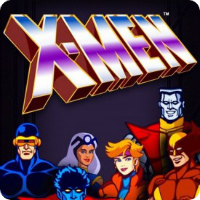
XMEN ARCADE
Here's a real-world example of this. Remember the old X-Men arcade game? It came to XBLA a couple months ago so I HAD to pick it up to be faceslapped by nostalgia. The question is, which character did you play as? Each hero has the same moves and supers that accomplish the same thing in slightly different ways. Point is: there is no "best" choice. Despite this, I always played as Nightcrawler because he was (is) my fave X-Man. He was the "best" solely due to Aesthetics.

This brings me to League of Legends. In LoL we see a monetization of Aesthetics and Tactics through selling Skins and new Characters. It's not the only game to do this (it's what makes F2P to begin with), but in LoL I found something interesting. Whenever Riot decides to revamp a character's portrait art or in-game model, that character gets used much more often by players than before. I'd like to see numbers on it since I'm just going off of what I see other people do in games.

This begs the question: if Ezreal looked completely different and had different lore (but played exactly the same), would he be as popular as he is? Imagine if Ezreal was actually "Ezmerelda: The Burger Queen" who was a morbidly obese woman wielding bottles of condiments for weapons. Would the pros pick him as often despite how his Mechanical Power was exactly the same? Does the undisputed fact that Ryze looks totally badass (especially with the new art) factor into how much I play him? In the end it is important that designers factor in Aesthetics into their balance charts.

Successful Balance of Design

So game designers have a very tricky balancing act to do in order to pull off RPG elements. They must balance each Tactical and Aesthetic choice with how much Power is gained through play. But when you add in the element of player skill, balancing goes out the window. For example, I think people can agree that Cassiopeia is harder to play than Ryze. Her abilities simply require more practice than smartcast spam Ryze. As a result, Cass will always have a little bit more Mechanical Power than Ryze since there's is a higher margin for error while playing her. It looks unfair on paper, but is balanced in reality (again...arguably).

People argue that LoL has a very "washed out" roster compared to DotA 2 or Heroes of Newerth. The Power differences between characters is much slimmer because that's how Riot chose to balance them, whereas DotA is balanced around having EVERY character be absurdly overpowered. Which is more effective? Or what about how Team Fortress 2 balances their elements? They enact self-limiting choices that contain advantages and disadvantages in one. Choose option B where you gain X but lose Y.

It seems that there are 3 ways to balance this trio of RPG elements:
Homogenization - Balance the game by making the differences between how Tactical choices mesh with Power gains very small. The problem with this method is that the Tactical choices become more and more irrelevant since the choices differ less and less between themselves.
While this tactic is employed by Riot and Blizzard quite a bit in their game(s), ArenaNet's Guild Wars 2 is the epitome of homogenization. Each class can do everything to the same effect (more or less). While this does make the game extremely well balanced and fair (which is good for competitive titles), it reduces the amount of emergent gameplay; the holy grail of good game design.
Anomalization - Balance the game by making each choice contain one huge anomaly that defies other balancing conventions within the game. Yes, I made this word up. This is the "everyone is overpowered so no-one is overpowered" approach.
DotA 2 uses this to great effect. The problem with this method of balancing is that it can be very difficult to achieve perfect Starcraft-like balance. In the case of DotA 2, it can also limit gameplay choices for each character (why would you build Ursa as a support?). The good thing about it is that its sets the stage for some serious emergent gameplay. It also takes the focus away from balance-between-characters and focuses on balance-between-teams.
Self-limitization -  Balance your game by making the choices within contain disadvantages equal to the advantages. 
Team Fortress 2 is the most polarized example of this method, although it's found in every game mentioned in this article to some extent. This method is based around the basic concept of Tactical choices mentioned above: achieve different gameplay while retaining equal Mechanical Power across all choices.
Koster said it's difficult to critique game design since fun is so subjective and unique to each person. But I think we can instead look at what we know is fun and go from there. We know emergent gameplay is always fun. It's fun when a game develops a meta-game within itself. Developing strategies is fun. I spend hours (days) pouring over talent trees and character builds. All of these things are contingent on incorporating the elements list above. Having fun is dependent on having choices. Choices do not mean anything if they are not relevant. Relevance is established through Aesthetics; the "Role" in Role Playing Games.

Wednesday, October 3, 2012

A Player's Time vs. Their Money: The Sequel Problem

Which of these two is worth more to you: a player's time or a player's money?

The answer may seem obvious: money, of course! If I obtain a player's money, who cares how much/often they play my game? If I can convince them to drop $10-60 bucks, I win; it doesn't matter afterwards since sales are sales. I can reinvest that money into my team, pump out new products, and stay in business.

The problem with this is that it is a front-loaded system. The money is made up front in huge initial bursts and then all the talk/support/community falls out over time as people play the game, get tired of it, and move on. Most games are, from their core design, meant to be played this way. Most "little black book" ideas that designers have are constructed to be a linear experience that ends at some point. But what if you look at the most (critically and/or financially) successful games in the past 5 years? How many of them actually have an end? According to Metacritic (I know, I know "ugh...Metacritic") these are the best games ever:


I know that chart really speaks to Metacritic's lack of credibility (no Shadow of the Collosus or MGS 1?) But to my point: out of all of those games, how many had or are a sequel? Every single one, with one exception. And most of them were designed to "end". No shit, who cares: good games make money, so we should create more content from successful IPs so we can make more money and buy corvettes and private jets, right? You know how those game developers love their private jets.

Stay with me now. From a design standpoint, what is a sequel? It's an addition to something that originally was planned to end at some point. When initially designing a game, designers have to build the game with the possibility of the game having one or more sequels. It must end, but not end. Through this development method (publishing method?) a game's core narrative and mechanics are limited by how much money it can generate.  In a way, games are really only designed to make money; they cannot exist if they do not make money or convince stakeholders that there is money to be made. For example, if Half Life 1 didn't sell we would have never seen Half Life 2. While this isn't an ironclad rule, and it also applies to other industries, it's nice to imagine a world where the creative process isn't affected at ALL by the financial success of the creation.

Books, for example, are mostly free of this constraint. Their development costs are so low that a writer can just write for funsies while the potential for revenue be damned! Imagine what types of games would come about if they were not designed to make money.

Back to my point: what about the games that are not designed to end? Games that hearken back to their more primal roots of competition? With a game designed from the beginning to never end, you remove the sequel problem entirely. This changes how designers approach them, setting these endless games down a completely different design path from their colleagues. Not having to worry about a potential sequel bestows this sense of freedom to the designer, a sense of finality to the mechanics and narrative.

While this concept is associated mainly to F2P/Freemium titles, the concept of trying to attain a player's time rather than have them buy your product extends into ALL games. For example, what would the Call of Duty IP be like without it's Multiplayer component?

The main problem with trying to attain players' time is that their time is much more limited than their wallets. Any competitive title worth it's weight in in-game currency requires many months to years of practice to become "good" or even competent at it. This requires your players to actually want to devote hours upon hours of playtime to develop such proficiency. I have quite a few F2P titles on my desktop that I no longer play, but keep them installed "just in case". I log about 10-20 hours in one, then move on to the next. Sometimes I'm in the mood for Tribes Ascend, other times I want to tear it up in LoL or Awesomenauts. In fact, I only really "play" 1-3 F2P titles from each genre. I doubt I am the only one in the world who does this.

When developers focus on trying to make my time-investment more worthwhile, I am more willing to spend more time (and eventually more money) on their game. I quit playing Smite because I didn't feel that learning the nitty gritty paid off at all compared to perfecting LoL. I quit playing Bloodline Champions (BLC) because despite how I LOVE it, having to play on European servers makes me tear my hair out. I know that, in the long run, I won't be able to "go pro" with BLC because of this reason.

We are seeing a big shift in the industry towards never ending games. I can attest that they're way more fun to design as probably 80% of my black book ideas are designed to be played forever. Gamers are maturing (might not be the right word) into wanting more from the games they spend so much time on, they want to be rewarded for developing insane APM in Starcraft II. They want to go down in history for having the fastest run in Dustforce (which has a great soundtrack by the way).

Time actually translates into money because of this. Let's say I decide to dedicate my time to becoming a beast in Call of Duty: Modern Warfare 1. What are the chances I will buy the next sequel(s)? I personally only started buying LoL skins when I hit level 30 and really started taking the game seriously. I decided that LoL was relevant to my life, and started investing money into it. People naturally have no qualms investing in things they seem important; relevance = importance.

The bottom line is: players seek to establish relevance for their colossal wastes of time and effort. Give your players relevance and you will win their time (and their money).

SIDENOTE: I recently was laid off from my sweet producer gig, so I will be updating this thing twice monthly from here on out. I decided I am going to stay home for a couple years while my wife finishes school, raise my son, develop my programming skills and collaborate on a few games. I'll add them to the portfolio page as they crop up, so stay tuned!


Wednesday, July 4, 2012

The Issue of Funding: Medium vs. Amusement

With so many, many proponents to games being considered an art form (whatever that means), why is it still ...not? In one word, Funding. With how expensive it is to actually go from concept to gameplay, games are on the trek up the long, hard road to becoming a medium. Traditional art had to do it, as well as movies, music; games have to find their place in our society before we will widely accept them as a medium rather than an amusement.

Before I continue, we need definitions:
Medium - An agency or means of doing something. (Dictionary.com)
I do appreciate dictionary.com for it's eloquence. Games as a medium are capable of things music, movies, traditional art, etc. are not: they allow the user to interact with the thought/idea. This allows artists to tweak the level of transparency to a much higher degree than they can with other mediums. Games as a medium provoke the simple question: Is it the job of the designer to foster the user to build their own experience or to describe to them, inch by inch, what is taking place inside their own imagination? Should I build a world for you to explore or tear open my skull for you to peer inside and look around?
Amusement - The provision or enjoyment of entertainment. (Dictionary.com)
This is the other much more common view: games as toys or novelties; distractions that lack the capability for depth. How can one draw meaning from playing with Play-doh? How is that any different from drawing meaning from games?

The Issue of Funding
Games are expensive to create. Angry Birds, a relatively "simple" design ('simple' as in low number of mechanics, not 'simple' as in lack of brilliance) and low 2D asset load, still cost $140,000 for the first playable. While no numbers were posted, the iOS super-retro game Monkey Labour cost over 300+ manhours for one very experienced programmer, not to mention the efforts of the other 4, +2 on contract.

Regardless of the huge difference between the financial success of each of those, they both cost a lot of money to make. Yes, GTA IV had a mega budget, including marketing/ads in the hundreds of millions, and SW:TOR was the most expensive MMO to create, ever, but we must look at the issue of funding through the eyes of the individual artist; we must look at development costs the same way a sculptor views her purchase of clay, tools, and the rent for her studio space. Very few sculptures cost $140k to create. Yes, you could argue the giant marble blocks Michelangelo carved cost quite a bit, but  Michelangelowas more like the Electronic Arts of his day, not the Rovio. This brings me to my next point:

Funding fuels the creative process.

Consider the painter. Regardless of WHAT she wants to paint, it all costs the same more or less. She is completely free of the issue of funding in this regard. The game designer, much like the director, is faced with the issue that their creative vision will costs large sums of money based on what it is. Rovio could not have made the next GTA, Halo, Gears of War, Call of Duty, with their team and setup. I'm not saying they were not capable of doing it, they just did not have the funding.

So, in a way...funding is as important to the design of a game as the mechanics and elements. Game Design Documents should be filtered based on the amount of money that can be pumped into it. You also cannot argue that people can simply get together and build something like Gears of War 3 on their own time. They could, but time costs money. They could, instead, spend that time making money and then use that money to fund a large team.

All of this means that the creative process is in the hands of those with the money. Granting "full creative freedom" doesn't really exist in the publisher-developer model, even if both parties want to. The one with the money will always have the final say.

Let's go back to Michaelangelo. The church funded his art, as they did most (all?) of the old masters. Without the church's interest (and money), they would not have been able to exist as artists. What if the church didn't fund them, but some eccentric gazillionaire from another country? Or what if it had been a different religion? What if Leonardo became wealthy off of one of his inventions, and used that to fund his own art, for his own ends? The result would have been COMPLETELY different artwork. This is a prime example of how the issue of funding affects content. We see it today in every game we play: studios are afraid to take big leaps in design, because funding comes from publishers, who are doing the logical thing and taking lowest-risk-greatest-reward projects. Not just in IPs, either, but in mechanics and elements as well.

I get a little depressed when looking at my black book of ideas. I have hundreds upon hundreds in here, but only a few are actually feasible because of how expensive the others are. As much as I love working on one of my big MMOs, in the back of my head there's always a little voice saying that it's just a waste of time. Their design and my craft is limited only by the issue of funding.

The Good News: Commission Based Funding

Certain business models are immune or work around the issue of funding. Alpha-funding, donations, Kickstarter, etc. all work around it. The project earns funding based on the amount of interest. In a way, it's a completely reverse model of distribution: instead of a product being created, set up to be sold, and then the money is made back, the money is made up front. Developers get to (in theory) feed their families, take care of their bills, expenses, etc. up front, while working on the project. When the project is finished, they move on to the next one. They get to always work and make money, consumers get exactly what they want. This is WAY more similar to how today's traditional artists make a lot of their money: commissions. It also front-loads the marketing aspect of the project.

Games are art, in my mind, but our society does not treat them as such: they are bought and sold as amusements. The entire industry is moving in the right direction: front-loaded distribution, lower development costs, and an expanding audience. And when it does happen, when games earn their beret, nobody will notice or even care. It will be as natural a transition as any other; evolution is fueled by the mutations we've seen in the past decade, but the process will always be slow and steady.

Thursday, March 1, 2012

Illusion vs. Reality: A Revisitation with Cline's OASIS

I just finished reading Ready Player One by Ernest Cline. I was skeptical at first; I thought it would be horribly patronizing through it's portrayal of gamers, which is much worse than stereotyping. I was hooked after reading the first chapter though. Cline doesn't just paste a stereotypical gamer nerd character in place of an everyhero. He touches on things prevalent in gamer culture like illusion replacing reality, online only relationships versus IRL ones, and places them in a classic apocalyptic backdrop complete with a giant evil corporation.

What it made me think about the most though was the old Illusion vs. Reality problem. How does this affect the ambitions of the game designer? The OASIS was, essentially, the ultimate video game that appeals to all people and does all things. Professor Brackin always warned us to never try and make “the ultimate video game”. I believe that, if given an infinite amount of time, money (resources), and freedom most game designers would end up with the OASIS or something similar. For example, one of the last analog games I designed in school had no rules behind it. Usually professor Christopher gave us some sort of rules, inspiration, or limitation we had to follow. Our game turned into a white board & markers package where the only rule was that each player got to create a rule on their turn. This was basically a game where anything was possible, an analog version of the OASIS. Players were limited by the size of the whiteboard, which could be expanded, by the levels of ink in the markers, which could be replaced, by their own patience, which can be replenished. It was basically an analog version of the Unity engine or the UDK.

Back to my fleeting point. Why should anyone wish to create something that let's people escape from reality? Or is the point of games and other media (or entertainment) to let people escape from their reality?

At what point does escape become replacement?

Let's improve on Cline's OASIS. Let's make it perfect. Let's say that on top of everything else it does, it also nourishes the user's body via the virtual food they ingest, it works out their muscles and such via the actions they perform, interacting with other users and NPCs will feel exactly as it “should” IRL. For all intents and purposes, and through whatever wonderful machinations, the “New OASIS” is a complete and total replacement for reality, akin to the matrix. Would this be such a bad thing? Would it instead be an improvement on reality? Human audacity certainly knows no bounds as we take sentience to new heights.

An alternate reality. Another true reality that does not feel like a game. Our imaginations would not be limited by being stuck inside our brains, we would not be limited by the rules that govern society or even the universe. Anything we think can be brought to “life”. It would improve our brains by allowing everyone access to all knowledge of the human race, and imagine the possibilities for collaboration. It would improve our physical bodies by requiring “real life” movement to control in-game actions, along with control-via-brain for the handicapped. For all intents and purposes, mankind would ascend to godhood since we would have the power of creation and be immortal by suspending our brains Futurama-style.


This brings me back to those who spend 51% of their time awake in an MMO. Their waking life is successfully replaced by their online one. Is an existence spent in illusion a wasted one? I find it empowering to master one's reality by completely disregarding the cards that have been dealt. The problem is finding an illusion worthy of replacing reality.

One could argue that by spending all of ones time in an illusion, they have wasted their life as they have achieved nothing. The problem here is that the whole concept of "achievement" and "legacy" boils down to a longing for immortality (a bug that is solved in our New OASIS): people strive to be "immortal" by leaving a lasting impression on this planet. What happens when the human race is no longer around, when all records/traces of our existence has been erased by whatever cataclysmic means of destruction?

Where does this place the game designer, the architect of the matrix? Games themselves, like movies and music, are little illusions; bite sized glimpses into the "ultimate illusion". How can a designer be so content to create a slice instead of a whole pie? I think this is why things like "going out of scope" and "feature creep" are so prevalent in design. We always want to add more to our illusion, we want to make our slice bigger. We want to reach that New OASIS level, but have to be content with our slice. But then isn't the "pie" of the New OASIS just made up of "slices" of linear content? If the whole is judged by the pieces, then the pieces become most relevant.

To answer the proposed question(s), escape becomes replacement not by a measurement of time, but rather when the strings that pull one into the illusion are greater than those that tie one to ones real life. If one lives to work to pay ones subscriptions (or purchase more games) then real life has been replaced; ones life only serves to fuel ones illusion.

The game designer is in a unique position of both consumer and creator. His strings pull him so hard through the illusion that he comes out the other side back into reality. He depends on the illusion to support his reality. His mastery of illusion leads to a mastery of reality.

Monday, December 5, 2011

Origin of the Game Designer

In this interview of renowned game designer Richard Garriott, Garriott made a curious statement that caught my attention:

As we've grown, we constantly try to find people to promote into leadership positions and form new teams - however, it rarely works. Much more commonly someone arrives on the scene or emerges as a super-talented individual. To make a top movie, you have to be super talented, to make a top game you have to be super talented, to write the best book ever written you have to be super talented. You can pick up skills on the job and you can refine your skills, clearly, but the very special talent that is required to truly be a top developer of any creative property type is not something that you can start life as B talent and a few years later emerge as an A talent. At least not commonly, it's sort of a lifestyle attitude that begins with people at a very young age. You can see they've got a top talent even before they have all the skills all they need. Those are very rare. For example, in the history of Origin, we really had 2, in 20 years, Richard Garriott, myself, who could develop Ultimas, we had Chris Roberts who could develop Wing Commanders, and those were the two triple-A hitmakers in our company. We had a couple of B+ guys, Warren Spector and Tony Zurovec [designer of Crusader: No Remorse] were sort of our B+ guys, and Warren went on to become an A player, but I don't even know what Tony's doing any more. But the same thing is true for almost any company, you go back over time with, people who are triple A talent, who have pretty good odds of making a hit, and then there's everybody else.
I'm not sure how I feel about this, as I consider game design to be a skill like any other. It can be learned, practiced, honed, but more importantly it can be critiqued and judged against a set of standards and practices.I will admit however, game designers are subjected to much gray area as the success of game design is measured by an elusive, intangible, immeasurable, subjective statistic: fun. How fun a game is determines how well it was designed, which is then reflected on the ability of the designer. But it brings up the question:

Are Game Designers Only Born, Not Made?

I will not argue that some just simply "have" that passion. I can speak for myself in the matter of those types of people referred to as "AAA types" by Garriott: making video games is close behind falling in love and raising children for giving life relevance. That sounds dramatic, but it's true. I referred to it in a previous post as the onus of the artist. I believe all creative people, regardless of their medium, can only be 100% fulfilled when they are creating. The act of creation can be expressed solely through a healthy marriage or raising kiddoes, it is not limited to an "artistic medium", but these people need to express it. They need to create.

But they are only a handful of individuals, and they are scattered throughout all sorts of walks of life. I doubt every well-respected game designer is one of these "AAA types". Many game designers simply "ended up" in that position, even if it wasn't their career goal. Especially on small indie teams, the "game designers" are not some tribunal of wisemen who convene at a round table to discuss mechanics, elements, story, etc. The hat of the "Game Designer" is one worn underneath other larger, more impressive hats like "AI Programmer", "3D Artist", "Level Designer", "CEO", "Producer", etc.If the team is small enough, the design of the game is really determined by the team as a whole. Each person has a skill set, but chose to work in the games industry because they have a passion for games, they like to work on and create them at some level. Everyone in the games industry is a "Game Designer" on some level, with a few exceptions.

But the ironic part is the design of the game is the MOST important part of the game. Good design(ers) lead to innovative new mechanics that spawn countless knock-offs and reproductions (cover mechanic from Killswitch is what pretty much made Gears of War famous). Good design leads to fun, and fun is the reason any of us (developers, publishers, consumers) are here; fun should always be the main goal, you really cannot have too much fun.

I came across this post from Peter Bottomley while looking for UDK tutorials (couple weeks into the massive UDK tutorial library which dwarfs Unity's support library by a mile). Peter's post mentions the aforementioned issue that "everyone" on a team is a Game Designer, but details the double standards game designers face to show how, really, not "everyone" on a team is a Game Designer. Peter mentioned he was inspired by an article by Mikael Säker,which is also a fantastic read. Mikael details the real duties of a Game Designer versus a Programmer/Artist/Producer who has a nice fitting game designer hat:


Designers are good at creating work (problems) for others. Designers are bad at providing the tools necessary for solving these problems.
In other words, the role of the game designer is not to create “ideas” for the team. It is to provide design. Those are two very different things. Design is not about dumping problems (the “ideas”) on other people and force them to do the actual design work.
I have heard designers say things like “this move doesn’t feel good, it has to be animated better so it feels right” – heck, I’ve said stuff like that myself! And you know what? That is a piece of utterly worthless feedback! If I work on a mechanic, I should know the purpose of it. If I can’t answer why it is in the design, what its function is, how could I ever know what to look for during implementation? It is lack of understanding that leads me to blurt out vague statements like “this has to feel cooler”.
It is my duty to properly drill into the designs. It is our job to sort out unknowns, find answer to questions and make sure that all those uncomfortable issues that appear during the drilling process are called out and dealt with. When our co-workers start to implement the design that we have created, we should give them the answers and tools they need.
When a programmer needs diagrams describing the flows of moves and metrics for speeds, distances and timings, I should be the one to turn to.
If a level designer needs pacing plans and a library of blueprints for combat encounter set pieces – I should create those tools because it is my job to understand the game and answer questions.
And if that is not inspiration to keep working on game ideas, keep learning C++ and C#, keep teaching myself UDK, Unity, and other kits, then I don't know what is.

But where do quality Game Designers come from? Game design, once defined, IS a skill you can learn. You can be good at, you can be bad at, and while "everyone" on a development team can do it, only a few can do it well. Game Designers, above all else, are problem solvers. We look at the current state of an idea and provide solutions that meet the necessary criteria of that project; eg. will it appeal to a certain demographic? Does it utilize our quirky programming lead who has an affinity for AI? Does it require our team to do things nobody knows how to do? Is it marketable? Is it within our budget/timeline? These are the questions Game Designers ask when "everyone" else simply goes, "Wouldn't it be cool if the game had ...?"

I think, then, that all a Game Designer is is a creative person with a knack for solving problems, and able to work extremely well with other people. These types of people are found in all fields, being separated only by their respective medium. My father, for example, is a union pipefitter. He is now rather high up in the company, but retains a position that requires, above all else, creative problem solving and being able to work with his team. He knows the strengths, weaknesses, schedules, lives of each of the men on his crew. He knows his field better than anyone else.

Maybe my father is responsible for why I became a Game Designer: growing up watching him solve all these complicated math problems I didn't understand, looking over his shoulder at the giant blueprints of pipe architecture that enveloped the entire dinner table, listening to his crew members talk about him like he was their best friend, maybe I just wanted to be like him. Maybe that's my origin.

Saturday, August 20, 2011

Industry vs. Inspiration

What's better: Money or Profound Cultural Impact? This is a debate found in every creative field, but only recently has it become an issue for video games. Sure, the core demographic has always been concerned, and so has every red-blooded game designer out there, about creating something brilliant versus something profitable. Everyone loves to hate Halo's story, anything with a movie license, and Dynasty Warriors 9. But with the rise of indie games, quality, innovation, and fun is what stands up above the crowd, and boast the most impressive margins.

Before I end my little intro., I wanted to paste the mission statement of a little developer called SRRN. It pretty much encapsulates the debate behind this article.
There’s been a lot of discussion about whether games are art. You can probably tell how we feel about that argument from our logo up there. To understand our position, it might help to know what we mean by art. For us, art is not about having the right answers. It’s about asking the right questions.
Video games allow us to look at some of our oldest questions in new ways. Bioshock used the conventions of a first-person shooter to ask questions about free will that simply couldn’t have been asked in prose or film. Shadow of the Colossus relied on third person perspective and the structure of action-adventure games to frame questions of moral consequence and introspection in ways that sculpture or photography cannot.
SRRN Games takes as axiomatic that games can be art. The question for us becomes: If games are art, then what? What does that mean for gameplay? What does it mean for narrative? Too often developers and publishers focus myopically on individual features – from frame-rates to play-time – and in doing so miss the forest for the trees. Artistic elements like narrative and character development aren’t things you can add onto a game like bolt-on upgrades.
Bricks are important for construction, but if architects never stepped back to see the bigger picture they couldn’t make art out of buildings. At SRRN, we step back from the individual components that go into game development to view the artistic whole.
It’s not just about the game. It’s about the conversations afterwards.

The Cost of Inspiration

Let's face it. Strapping a license on to the same old tired mechanics is cheap, easy, and makes lot's of money. It's sort of a no brainer for publishers. And, unfortunately, innovative games based on a new IP don't usually sell dick. I work with a man who was a sales rep / zen-master for Sony for a good while, and he told me that Shadow of the Colossus was one of the hardest games he had to sell.

So why are people like myself so obsessed with creating something that will truly impact a person's life? Video games exist solely to entertain, so if it accomplishes that then why go through all the extra effort? Does the guy who designs paper shredders want to create one that is way more expensive to manufacture, require the consumer to dick around with it for months before they can actually use it, or design it to maybe not even shred paper?

Picasso figured this debate out, eventually. He is arguably the most prolific artist of all time, having created over 147,800 pieces. Many critics say he "sold out", as we has simply able to sign his name on a sketch of cat poop and it would sell for a bazillion dollars. Do game designers work in the same way? Is there a point in time before they too sell out? I think it happens in reverse, opposite of all other creative fields. Most (all?) game designers do not start their career as a game designer. Many start in the wonderful land of tedium called Quality Assurance, others opt to see how games actually make money by traveling the Publishing road, some were already coding other types of software, and others were professional magicians. Then, when your title and salary changes to "game designer" you get to work on awesome stuff like, Barbie's Big Adventure in Hairspray Land, Horshoe Toss Mania, or World of Fight. You have to prove to the world that you can take a $40,000 budget with a 2 month dev. cycle and create something people will actually spend money on. You have to sell out first, then once you're famous like Itagaki you can afford the cost of inspiration.

But what is the cost of inspiration? To figure this out, we need definitions. Let's examine our two main variables.

Money
Money, in the context of a salary, is how a society deems an individual's worth that exist within. A society could be your company, or your country, every society is different. If you have a team of 3 game designers and you get paid more than the other two, the society of your company deems you more important than the other two. We all know it doesn't usually work out like this due to politics and general shenanigannery, but that's the idea anyway. By this definition, the money your employer gives you to do work directly translates into how much your work and you are valued.
Profound Cultural Impact
A PCI is a game changer. Usually found in academia, and usually only valued in highly magnified retrospect, PCIs completely change the way an individual, and as a result a society, thinks. It could be anything. Metal Gear Solid 1 made me want to become a game designer after I played the demo I got in my U.S. Playstation Magazine over and over and over for months until the game itself came out when I was in middle school. That video game changed the course of my life forever, hopefully for the better. It showed me a whole new world of expression of ideas. PCIs are responsible for the tingle you get in your lower spine when something awesome happens in a good book. PCIs are what leave you feeling invincible when you walk out of a great action movie. They change how you see the world, if only for a little while. PCIs can also be people like Martin Luther King Jr., inventions like the car, but in here we only speak in the context of video games.
In short the cost of inspiration is money, which by it's definition means it costs value to society. Inspiration is what breeds the creation of a PCI, which means the onus lies solely on the inspired. Sure, you can be like Notch and make something wonderful on the side, but that cost him time, and time = money. Time spent on Minecraft could have been spent on developing something else for someone else to make more money. So why did he do it? He was already creating games, but they were not fulfilling his need to create a PCI. It's almost as if, over time, a hole is created that slowly fills with inspiration. When it fills up it overflows and spills everywhere, leading not only to the creation of a PCI, but also to a life changing event for the creator. The act of creating a PCI is a PCI to the creator of it. It's inevitable, really. Creative people can't avoid it which might be the only reason we have inspired games that challenge convention.

If a designer is placed in an environment where they have total freedom all of the time, will they ever become inspired again? Or will they fall victim to the successes of their first titles, thus generating a creative "template" that their brain falls back on whenever a withdrawl is needed from their giant hole of inspiration. This can lead to designers pretty much making the same game every time, even though they have free reign.

Not all is lost, however. I recently represented Southpeak Interactive at the VPD Summit in Folsom, CA at the end of July. It was my first show, and I had a lot of fun meeting some real salt of the earth alcoholics sales reps. For real though, these people know how to drink. I didn't meet a single asshole, just a bunch of wonderful people. One man I met there was Joe Gonzales, and we had a hell of a conversation which is what actually motivated me to log in here and write up a rough draft of this post. His view is that game design should be about making games that change people's lives. The money will follow as long as you do all the marketing well, and don't have your head up your ass. It was very refreshing to meet someone who has been in every facet of this industry to have this point of view. I was under the impression that such dreams of creating art through games were crushed under the hammer of experience, under the layers of glaze that lead to jaded hopes. I was worried that one only has enough time in this industry to have big dreams before it becomes all about the benjamins. It's nice to see this isn't always true.

Games can truly be about the bigger picture in life, capable of delivering profound messages that change people's lives. We are getting closer to this as the creation of games becomes more accessible, distribution/marketing becomes easier, and games become services versus products. It will just get better.

Just don't give up like Japan.


Tuesday, July 5, 2011

One Big Step Out of the Treehouse


It's official: I still have a career in video games. The Supreme Court declared video games to be an equal to film, music, literature, etc. in terms of their ability to be a communicative medium. So if the Supreme Court takes video games as seriously as they take everything written by Mark Twain, everything filmed by Hitchcock, and every stroke laid down by Michelangelo, why don't video game developers and publishers? Why is the industry so afraid to embrace the artistic qualities of video games? Why settle for making toys for kids/grandparents? And don't say the money; not everything Nintendo makes does well.


I doubt Justice Ginsburg has a lvl 85 Warlock (Scalia might) or has ever been enraptured by the narrative beauty of Bioshock, but even she can see the artistic potential of video games. David Jaffe just bumped this really old debate in his interview with CVG.


David Jaffe versus Steven Spielburg


David Jaffe is actually one of my heroes partly because I am a little racist. I grew up idolizing Kojima (who didn't?) for creating Metal Gear Solid, but let's face it: I am not Japanese, the development climates for Japan and America are completely different. I basically idolized a man I have nothing in common with, besides a passion for game design. That's like Michael Jordan idolizing the Scottish guy who invented basketball. Yes, they both really, really, really love basketball, but that's all they have in common. David Jaffe is basically my Dr. J.


It's not just his games (although growing up Twisted Metal: Black rarely left my PS2) it's how he views games.

    "I over-eat when I'm stressed. I'm not present enough in my life to just be with the stress. When it comes to someone working out of a place of ego, it's the same thing. The creative talent and their vision should be enough. The end goal of someone patting you on your head and saying: 'You're an artist now. You mean something'... I'm not trying to be an asshole. We've all fantasized about those moments because we think it means more than it really does. But in reality, it doesn't mean shit."

 I do not want games to be art so I can dust off my beret, pack my vintage oak pipe with all natural tobacco created by a small tribe of native Americans, and sit around with hipsters smelling our own farts. I want games to be viewed as an art form because it will change why people make games. As long as games are being made to be sold to retailers, to appeal to demographics, to fatten pockets, they will never grow up and game designers will be forever stuck in their treehouse. Why is Steven Spielburg able to do anything he wants to? Because he has made amazing blockbuster movies that redefined film. Sure, a few games have made HUGE steps in the right direction. Once we make games on par with Speilburg's films, we can get out of our Treehouse and start making big boy games that make big boy money, all while being respected as a medium.


I do think we are getting much closer. L.A. Noire was the first video game to be featured at the Tribeca Film Festival. Colleges around the world are or have built video game design programs. It just seems like everyone really, really wants video games to advance, but they never do due to the current antiquated development process.


Hell, even game design itself is filled with relics of the past. Health bars are leftovers from when machines could not process a 3D model reflecting real damage like broken limbs, blood, etc. The little green HP bar was a mechanical representation of all of those things. "Health packs" don't make any sense at ALL (how do you package and ingest pure 'Health'?) yet they are found in pretty much every modern FPS. RPGs are even worse, suffering from a myriad of relics from Dungeons & Dragons. Str, Int, Agi, etc. are representations of things that can now be accurately reflected in games. The whole concept of gear in general as well: how does a belt make you stronger or more intelligent? It doesn't; via stat gains the belt is a just a catalyst for character growth, because either due to a lack of computing power or the game being pen and paper, showing that your character got stronger was impossible. But now it is. My character fought some baddies and is more experienced in fighting? Great...make him larger, change his muscle tone. All of this feedback to the player should not break the fourth wall, and that's what all these numbers are doing. But I digress.


Point is: yay for video games, now let's keep up the momentum! We will see our Hamlet one day. As I have stated in a previous post about Moore's Law, it will only happen when the technology reaches a climax and a kid in his basement can create something paramount to Bioshock, by himself, much like how a couple of kids with a video camera can create some spectacular amateur films.

Monday, May 2, 2011

Terminator v. EMA - My Thoughts

Posted in my other blog for my CMC class is a post about the the Supreme Court hearing on violent video games. I liked it so much I am shamelessly copy and pasting it here. Enjoy.


The New York Times published this wonderful write up on the Schwarzenegger v. Entertainment Merchants Association case back in November. The results will be published in June 2011.


The hearing is about restricting the sale of "violent video games" to minors. If passed, a law will be created that heavily fines any business selling newly illegal games to those under the age of 18, essentially treating games deemed "violent" the same as pornography. The representative for the EMA says this is a violation of free speech as detailed in the First Amendment, and the other side touts a 1968 precedent that states, "extremely violent material can be obscene as to minors even without a sexual element."


I find it highly ironic that Arnold "The Freaking TERMINATOR" Schwarzenegger is leading this charge against violence. And it's not just his movies that are violent, there are many licensed gamesstarring the Governator that depict gratuitous violence. That's like if Ron Jeremy, (in)famous porn star and third Mario brother, started an abstinence campaign.


Here's a description of the first Terminator game, stolen from Wikipedia:
You take on the role of Kyle Reese and protect Sarah Connor from the cyborg sent back in time to kill her, or become the Terminator and eliminate Kyle and Sarah. Either way, the player chases his opponent through Los Angeles buying or stealing weapons and equipment while attempting to eliminate his enemy and avoid the police.


"Or you become the Terminator to chase and slaughter innocent civilians". I wonder if the EMA representative brought this up in the hearing.


Anyway, if the law is passed it is bad news for the games industry, which means it is bad news for me since I am a part of the games industry. This is not to say I don't partially agree with the idea behind the law. I do not want young kids being exposed to the horrible scenes of violence and depravity that are found in some games. I just argue that video games be treated with the same respect that movies and music are. Does Cinemark get fined an arm and a leg for allowing a 13 year old to go see Saw IV? No. Should it? I don't think so. As is always the case, the parents are to blame for their screwed up children. Either through neglect or good ol' fashioned abuse, parents are fully capable of turning their children into serial killers without the help ofGrand Theft Auto.


The shining gem of the assault is a game called Postal and Postal 2, which is about a man who has free reign over the town of Paradise, AZ. There is never a goal in the game to kill anyone, the game just really really really wants you to do so. I would like to make this one glaring point about the Postal series:


The Postal series can only be played if you are 18 or own a credit card. It has an "AO" adult rating, and is NOT sold in ANY brick and mortar retail store...except maybe like a sex shop, which minors cannot enter anyway.


It can be purchased online, but that would require the use of plastic. I do not know many 13 year olds with their own credit cards. So basically if you cannot buy porn, you cannot buy Postal. GTA is pretty depraved if you want it to be, but it is not required nor encouraged. And yes, God of War has cartoony boobies in it, but most of them are attached to monstrosities like Medusa or harpies.


To summarize, treat games the same way as other media, parents be more proactive in what your kids have access to, and I have never met anyone who has played Postal.

Saturday, April 23, 2011

The End of AAA Titles?

It seems the games industry community is up in a tizzy about the future of boxed retail products. I can understand, they have been doing it for FOREVER. These just seem so bleak, if not also a little pouty:

-Gamings-Future-Looks-Uncertain-Says-Epic-Boss (also here at gamesindustry)
-The Necessity Of Making Free-to-Play Moves 
-Industry Vet to Young Devs: You Might Never Be AAA
-Edery_Nintendo_Had_Better_Watch_Out_For_Apple_Google

Talk about depressing; this is just four of them. Why is everyone so afraid of change? This is not the apocalypse everyone is making it out to be, which brings me to this blogs focus point:

This Is Not the End of AAA Titles
I will never stop playing or consuming them. My friends will never stop playing or consuming them. I doubt we are the ONLY people that feel the same. Look at it the way many developers view their fan base: if you can create a product for a very specific group of people, it actually makes it easier to develop that product because you have precedential releases that define what to do.

KOEI's Dynasty Warriors (DW) series is (in)famous for this. Those games have to be pretty cheap to make by now. There are very few new assets per release, but people buy them up (myself included). Now if our little DW community is large enough to justify new DW releases every so often, how does this NOT apply to any other title? MMOs are pretty much the prime example of this idea. They establish a community after the rush dies out, then they build for that community only. People who do not play Age of Conan do not care nor consume patches made for it: it is content created without the intention of expanding the consumer base.

So what does this mean for AAA titles? Do people REALLY think the next Call of Duty is not going to sell? Those games were large multi-bajillion dollar titles, and they sold just fine because of the precedential consumer base. Now not every game is Call of Duty (although many try to be). I think DLC is a great route for developers to squeeze out extra profits from the assets used in big AAA titles. It worked for Fallout 3, Dragon Age, Mass Effect, etc. What about treating a AAA title as a base for something that builds a ton of profit over time? It would allow them to stay competitive with F2P games.

F2P games generate very little revenue for each transaction, but they have multiple transactions over time. I have been playing League of Legends for about 7 months and have spent around 100 bucks on it. Thats a whole lot more than 60 (standard retail price), and will just grow over time. Now look at Fallout 3. It has five DLCs and one (amazing) sequel. Thats 6 new opportunities for revenue using old assets. When I say "old assets" it is not obviously true: there are many new assets in each game, but the MEANS by which those assets are created is already in place. It does not take a whole lot of people to utilize the same pipeline to create new stuff. A good modeler can poop out a mesh in a couple hours, it can be textured, rigged, animated, etc. by a small team in not that much time. The licenses are already owned, or better yet the in-house engines are already built.

So here's a list of what AAA titles of the future need to do to stay competitive. The strategy of a AAA title and developer is to spend a whole TON of money initially, but eventually reach a spot where future products that are of the same quality if not better than the old ones and can be created for the same consumer base for fractions of the cost.

  • Establish a pipeline
    • Build an in house engine like iD or Crytek did. Its expensive, but it cuts costs down the looooooong road. Plus you can sell the license to other devs. If not, buy an extended license. 
    • Build an initial development team to build the pipeline; eventually lay off everyone for a tiny core team to produce future assets. Also, find everyone you laid off jobs because you are not a grinch.
    • The goal of this part is to have something set up that will let you continue making future products on the same level as the initial release.
  • Utilize intelligent game design to drive sales, not more money
    • Ideas are cheap. Using various development methods to beta test ideas before financial commitment like iterative development, cheap ideas can be profitable ideas with low(er) risk.
    • The industry is becoming less and less a gimmick or toy based industry. Longer console cycles, "fad-ness" of zany peripheral based games like Rock Band, and overall "meh-ness" of the Kinect means people want engaging experiences, not mere distractions. This applies to Facebook "games" as well: devs have to continually build new experiences to keep the core engaged.
    • Use the establish pipeline to churn out great DLC. Its like writing a novel series: there is always the hardcore fan base that will buy everything you make. The goal is to get the fan base large enough to support every subsequent DLC release.
  • Split studio into pieces.
    • Schafer did this, sort of. The idea is to split your studio into separate teams that each work on different types of games. Apps are big right now, so have a steady revenue stream with your app side, while bigger more rewarding risks can be taken with a AAA side. I would argue that in the long run of a studio if you could flop 3 times on the AAA side for every Call of Duty-esque franchise to be established, thats a win.
    • The goal (or point) to this is to keep able to afford the same team working together for more than one project. I have found through school that working with the same team over multiple projects leads to better results than having all new members every project.
    • There is no game that can appeal to EVERYONE, but who says you cannot create a studio capable of appealing to everyone? 
    • What we are seeing now in the games industry is what happened to every other media industry at some point. Specific types of games for specific types of people are emerging (not talking about Genres). There was a point when going to see a "movie" turned into going to see a "comedy" or "western" or whatever. People who play apps exclusively will generally shy away from picking up Dead Space 2, and vice versa. Most of my "hardcore" gamer friends shy away from Facebook games because they "are not games" and "are a waste of time." 
  • Monetize multiplayer
    • I do not mean charge for access; that will just turn away players. Monetize similarly to how Team Fortress 2 monetizes, micro-transactions. Imagine the multi-player side of a product being able to bring in more revenue than selling the box/download itself! Two streams is greater than one.
    • The key is BALANCE. If any monetized aspect of the game will give one individual more power than another, it is imbalanced. World of Warcraft private servers are notorious for this. In fact, WoW private servers are great testing grounds for new monetization ideas (they're freeish).
    • Great monetization balancing can be found in League of Legends, Vindictus, Team Fortress 2, and most korean F2P MMOGs.
These are just some ideas of mine, pure speculation from an observer. I do not want devs to give up hope for AAAs. There is still a large enough chunk of gamers who will pay to play them, and then some. The next billion dollar idea is to expand the consumer base for AAA titles. I have a couple that might work, but those aren't free!

    Tuesday, March 29, 2011

    Game Design: Using Rules to Build Experiences

    When people ask, "What's your major/area of study?" and I reply, "Game design & Ludology", 99% of the time I get this response, "So you like...write code and stuff?" Well, yes...some (most) do, but I prefer not to (although I can). Then I launch into a dizzying array of real world comparisons and metaphors which usually leaves my glamored inquirer standing lost amidst an ever-growing storm cloud of crap pulled from my ass.

    So I think it necessary to log an answer made of stone and mortar rather than smoke and paper:

    What is Game Design?
    In short, its just rules. That's about it. Game designers are people who make rules. Now, the games industry usually forces game designers to be masters of other fields too: art, programming, sales, management, etc. In fact it is pretty much required that as a game designer you also need a "back up" area of expertise (mine is writing and narrative construction; and maybe beatboxing).

    Game designers are the ones who decide what, exactly, makes a game good v. what makes a game bad. I believe this is the most important part OF a game. Graphics, sounds, control methods (peripherals, motion sensors, etc.) are great, but the integral experience of the user is based around what they are DOING inside a game. Tetris is a great example (although timing and resulting innovation had a lot to do with its commercial success) of this.

    Look at a game like....Poker. Poker is what I call a "pure mechanics" game (there is a ludological term for them somewhere). This means they are completely devoid of a narrative, and have no (intentional) higher meaning behind its construction. I would have used Chess, but I can argue that Chess has a narrative based on the names, traditional models, and mechanics of the pieces used. Poker does not intend to tell a story; however, because it is a game which is interactive, it acts a catalyst by which stories are created (everyone has a crazy poker night story). These games are arguably much more popular than most for the aforementioned reason. When a group of people gather for an impromptu game of soccer, a story is created about playing soccer.

    Now the relationships between Ludology versus Narratology is to be saved for another post. However since it is in the context of this post, I will say this: rules can be used to tell stories. As seen in Conway's Game of Life (great video there) simple rules (Game of Life has four, although that video says two) can have a profound depth and meaning behind them.

    I am currently reading Gonzalo Frasca's 2007 Ph. D. dissertation, Play the Message, and in the beginning he talks about a movie called Kamchatka which is about an Argentinian family holed up Anne Frank style. The father uses a Risk knock off called. T.E.G., to teach his son to never give up despite how the opponent is overwhelmingly powerful. The game itself is about warfare, strategy, etc., but the mechanics (rules in a context) can be used to drive home an idea. This is what I love about games. This is why I say there are very, very few "good" games out there, most simply do not take advantage of this. Most games use devices found in movies to further a narrative. Devices like dialogue and cinematics, both things that are hard-coded and can NOT be experienced in ANY other way because they are non-interactive (Resident Evil 4's "interactive cinematics" do not count either, although they are neat).

    Game design is all about the rules. When the rules are placed in a context, they become mechanics. I am exploring this in my senior Capstone project Chains: An Exploration of Determinism and Free Will by creating systems of rules designed to dictate the actions of the universe, rather than create the universe by hand. Instead of saying, "the player goes here and does x using y", I say, "well there's gravity, the NPC's have "souls", and everyone is trying to achieve their goals in life". The game takes on a new meaning now in true non-linearity. The act of playing builds the story unique to the player.